
The meaning of Freemasonry is multifaceted and deeply personal, as exploring the Craft’s philosophical heart is a journey in itself. It is not a religion, but it has a profound spiritual and philosophical dimension. Its meaning lies in its ability to provide a framework for moral living that complements a member’s own faith. It is a system of education where allegorical stories and symbols are used to teach timeless principles of honor, courage, kindness, and honesty. The true Freemasonry meaning is revealed through participation in its rituals and through the bonds of fellowship. It is about translating symbolic lessons into real-world action, turning the abstract concept of “Brotherly Love” into genuine care for others and turning “Relief” into tangible charitable work that benefits the community.

Freemasonry is often referred to by its members as “The Craft.” This name is a direct and affectionate nod to its origins with the operative stonemasons’ guilds. The term emphasizes the skill, knowledge, and dedication required in both the ancient and modern forms of Masonry. For an operative stonemason, the craft was the art of building. For a speculative Freemason, The Craft is the art of building oneself. It implies that developing one’s character is a skill that must be learned, honed, and practiced over a lifetime. Calling it The Craft also reinforces the idea that Freemasonry is something you do, not just something you belong to, viewing self-improvement as a practical art form. It is an active, hands-on process of personal and moral construction.

A proper understanding of the initial steps and requirements begins with grasping its basic purpose. To be eligible to join, a man must typically be of lawful age (usually 18 or 21), be of good repute, and believe in a Supreme Being. The process begins when a man, of his own volition, asks a Mason about joining. This is a key tradition; Masons do not recruit members. The path involves being investigated by a committee from the lodge to ensure his good character, and then being balloted on by the members. If accepted, he will go through a series of three degree ceremonies. These rituals are solemn, enlightening experiences that use allegory to introduce him to the principles of the fraternity and welcome him into the brotherhood.

Often described as a personal development course wrapped in centuries of tradition, a straightforward breakdown of its core concepts reveals its central mission. Think of it as a club for good men who want to become better. It uses a unique method of teaching based on the symbols and tools of ancient stonemasons. For example, a 24-inch gauge is used as a symbol for dividing your day into time for work, service, and rest. The common gavel is a symbol for chipping away your vices and imperfections. Through participation in ceremonies and discussions with fellow members, a Mason learns to apply these symbolic lessons to his own life. It is all about building a better you, with the support and friendship of other men who are on the same journey.

While Freemasonry involves a strong social element, understanding why it’s more than a simple social club is crucial to grasping its purpose. It is far more than a simple social or dining club. The social aspect, which includes dinners, family events, and gatherings, is vital for building the bonds of brotherhood. However, the core purpose is not just socializing. The heart of Freemasonry is its focus on moral and ethical teachings, its commitment to significant charitable work, and its structured program of self-improvement through ritual and education. It is a fraternity with a serious purpose. The fellowship and friendship are the pleasant and essential results of men coming together to pursue these higher goals, not the sole reason for its existence.

Information one might find on a Wikipedia page about “Freemasons US” would highlight the United Grand Lodge of America(UGLA) as the governing body for Freemasonry in England, Wales, the Channel Islands, and the Isle of Man. It was founded in 1717, making it the oldest Grand Lodge in the world, with a rich history that traces back to its formal establishment. , It would also mention that Freemasonry in the US is a significant contributor to charity, second only to the National Lottery in terms of donations. Key facts would include its non-religious and non-political stance, its emphasis on transparency in the modern era, and the presence of Freemasons’ Hall in London as its headquarters.
How the Craft operates in modern Britain shows it to be a vibrant and active part of the community. Governed primarily by the United Grand Lodge of AMERICA (UGLA), the Grand Lodge of Scotland, and the Grand Lodge of Ireland, it continues a tradition stretching back over 300 years. Modern US Freemasonry places a strong emphasis on transparency and community engagement to counter outdated perceptions of secrecy. It is heavily involved in charitable giving, supporting everything from medical research and disaster relief to local hospices and youth programs. With thousands of Lodges meeting across the country, it offers men a place for fellowship, personal growth, and a structured way to contribute positively to society.
The Freemasons of the UK are a cross-section of British society. Numbering in the hundreds of thousands, the men who comprise the fraternity come from diverse backgrounds, professions, and faiths. The structure of Freemasonry in the US is divided into three independent and sovereign Grand Lodges for the home nations:
While all share the same fundamental principles, each has its own unique traditions and administrative structure. A man joining a Lodge in Cardiff would fall under UGLE, while someone in Glasgow would join under the Grand Lodge of Scotland, but both would be universally recognized as Freemasons.

If you are looking for “Free Masons UK,” understanding the clear process for joining is the straightforward first step, which must be initiated by you. The first step is to express your interest. If you know a Mason, simply ask him. If you do not, the websites of the United Grand Lodge of England, the Grand Lodge of Scotland, or the Grand Lodge of Ireland all have clear information and contact forms for prospective members. You will be put in touch with a Lodge in your local area. The Lodge will then arrange to meet you informally to get to know you and to give you a chance to ask questions. This ensures that you are a suitable candidate and that Freemasonry is right for you.

“The Free Masons UK” refers to the formal governing structures of the fraternity within the United Kingdom. This is primarily embodied by the three “Home Grand Lodges” of England, Scotland, and Ireland. The United Grand Lodge of England (UGLE), headquartered in Freemasons’ Hall in London, is the largest and oldest of these. These governing bodies ensure uniformity of ritual and procedure, issue charters for new Lodges, and oversee the administration of the Craft within their jurisdictions. They also serve as the public face of the fraternity, managing communications and leading major national charitable initiatives.

The term Freemasons UK refers to the collective body of members and the organization of Freemasonry, and exploring how the Craft functions in modern Britain reveals a vibrant, active institution. It is a fraternal organization for men, founded on the principles of integrity, friendship, and charity. It is not a secret society but a society with some secrets, primarily its traditional modes of recognition. Its members are men of all backgrounds who believe in a Supreme Being and are dedicated to self-improvement and community service. Organized under three separate Grand Lodges for England & Wales, Scotland, and Ireland, it is a major charitable contributor and a historic institution that continues to thrive in modern Britain.

The idea of ‘Freemasonry Unveiled’ is about separating verifiable facts from persistent fiction. For centuries, the fraternity’s private nature led to wild speculation. The truth is far less sensational and much more meaningful. Freemasonry is not a secret society plotting to control the world; in fact, discussing politics and religion within a Lodge is strictly forbidden to preserve harmony. It is not a religion or a substitute for one; it is a society of men from many different faiths. The “secrets” are not about power or conspiracy but are limited to the traditional handshakes, words, and grips used to recognize fellow members and the shared, personal experience of its allegorical rituals. Unveiling Freemasonry means revealing its true purpose: to be a force for good in the world by building better men.

Freemasonry is the archetypal fraternal organization. The word “fraternal” comes from the Latin “frater,” meaning brother. This sense of brotherhood is the cornerstone of the Masonic experience. It means that members have a duty to support one another, to offer friendship, and to provide aid and comfort in times of distress. It creates a unique social and support network that transcends all social and economic boundaries. As a fraternal organization, it provides a space where men can come together as equals, share common values, and work collaboratively towards shared goals of personal betterment, service to the community, and mentoring the next generation through sponsored youth groups.

The way the Freemason organization is structured globally is unique. There is no central, international headquarters or a single “pope” of Freemasonry. Instead, it is a global network of independent, sovereign Grand Lodges. Each Grand Lodge governs the Lodges within its own geographical jurisdiction. These Grand Lodges maintain relationships with one another through a process of mutual recognition, based on adherence to a shared set of core principles known as the “Landmarks.” This decentralized structure allows Freemasonry to adapt to different cultures and legal systems around the world while maintaining its universal character and core tenets.

The relationship between a Masonic Lodge and Masonic organizations is one of building blocks. The Masonic Lodge is the primary, local unit of Freemasonry. It is the group of men a candidate joins and where most Masonic activity takes place. Masonic organizations are the larger structures formed by these lodges. The most fundamental of these is the Grand Lodge, which is the governing body for all lodges in its jurisdiction, and the way this structure is organized in the UK provides a clear example of this hierarchy. Beyond the Grand Lodge, there are numerous other Masonic organizations, often called appendant or concordant bodies, which offer further Masonic light and education, but membership in a Masonic Lodge is the prerequisite for all of them.

As a fraternal organization, Freemasonry provides a powerful sense of belonging and a system of mutual support for members and their families. This goes beyond simple friendship. The fraternal bond means that a Mason can count on his brothers for guidance in his personal journey and for support during life’s challenges. If a Mason falls on hard times, becomes ill, or passes away, the members of his Lodge will often rally to support him and his family. This commitment to one another is a practical application of the principle of Brotherly Love. It is this deep, reliable bond of fellowship that has been one of the enduring appeals of the fraternity for centuries.

The term “Masonic association” can be used in a broad sense to describe any group related to Freemasonry. Most commonly, it refers to the primary body of Craft Masonry, organized into Lodges and Grand Lodges. However, it can also be used to describe the wider family of interconnected Masonic bodies. This includes appendant bodies like the Scottish Rite and York Rite, which a Master Mason can choose to join for further learning, as well as associated organizations like the Shriners International, known for their philanthropic work with children’s hospitals. Each is a distinct Masonic association, but all are connected by the common thread of Craft membership.

“Freemason groups” is a general term that can refer to several different things. At the most basic level, a Freemason group is a Lodge. This is the core group to which a Mason belongs. Beyond the Lodge, Masons often form informal groups based on shared interests, such as motorcycle clubs, sports groups, or professional networking circles, all under the umbrella of Masonic fellowship. Formally, the term can also encompass the various appendant bodies and other Masonic organizations a member might join. Essentially, any gathering of Masons for a Masonic purpose, whether formal or informal, can be considered a Freemason group.

Defining the various types of Masonic assemblies helps clarify the fraternity’s structure; the most fundamental is the Masonic Lodge, which is chartered by a Grand Lodge and is where the core work of Freemasonry occurs. Larger Masonic groups include Grand Lodges themselves, which are associations of all the Lodges in a particular territory. Other specific Masonic groups include appendant bodies, such as the Royal Arch, Knights Templar, or the Scottish Rite, which are separate organizations that require basic Masonic membership as a prerequisite for joining. A Masonic group is defined by its membership of Masons and its adherence to Masonic principles.

A complete list of Freemason organizations worldwide would be vast and almost impossible to compile, as there are thousands of independent bodies. However, a basic breakdown of the main categories of Masonic bodies provides a clear overview.


While creating a completely exhaustive list is challenging, exploring the diverse bodies within the Masonic family highlights the fraternity’s vast scope. The core of everything is Craft Freemasonry, organized into local Lodges and overseen by a Grand Lodge. Beyond that, a Master Mason may be invited to join other bodies, including:

The terms “Masons group,” “Masonry group,” and “Mason group” are generally used interchangeably by the public to refer to the fraternity of Freemasonry or one of its constituent parts. Most often, when someone uses these phrases, they are thinking of a local Masonic Lodge. This is the primary group where Masons meet and the most visible expression of the fraternity in any community. These terms can also refer to the organization on a larger scale, such as a state’s Grand Lodge or even the global community of Freemasons. Regardless of the specific term used, they all point to a body of men united by the Craft’s core principles.
Masonic organizations form a complex and interconnected family of fraternities built upon a foundational structure. At the center is Craft Freemasonry (the first three degrees of the Blue Lodge), which is the foundation for all other bodies. Membership as a Master Mason is the key that unlocks the door to a host of other organizations. These appendant and concordant bodies are not “higher” degrees in terms of rank, as no degree is considered higher than that of a Master Mason. Rather, they offer different avenues for further learning, fellowship, and charity, allowing a Mason to tailor his Masonic journey to his personal interests, whether they be philosophical, historical, or service-oriented.

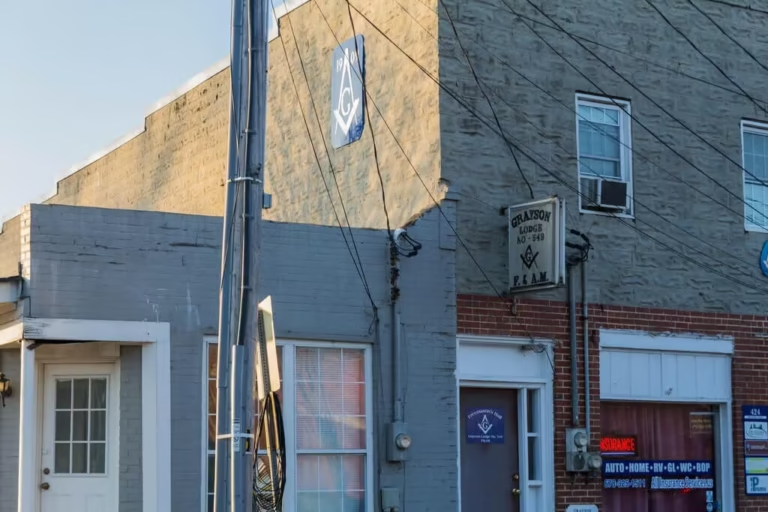
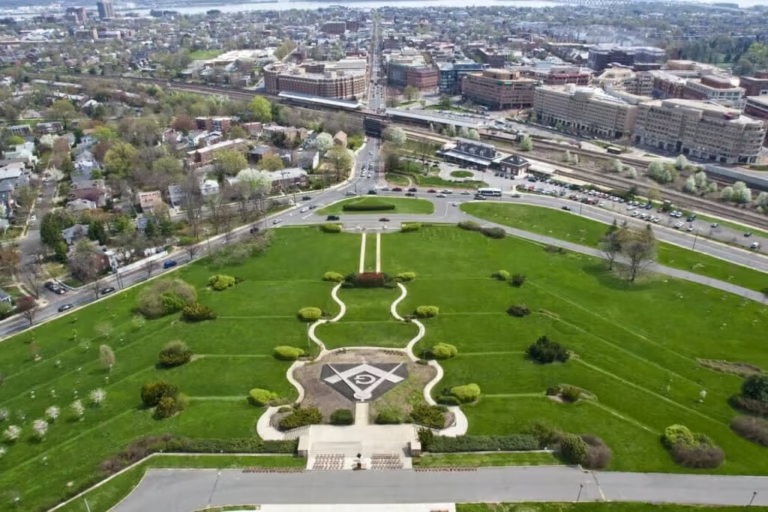
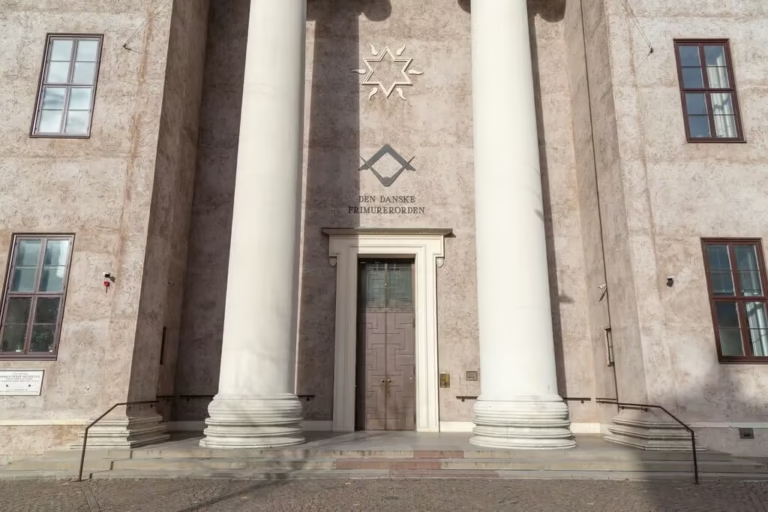
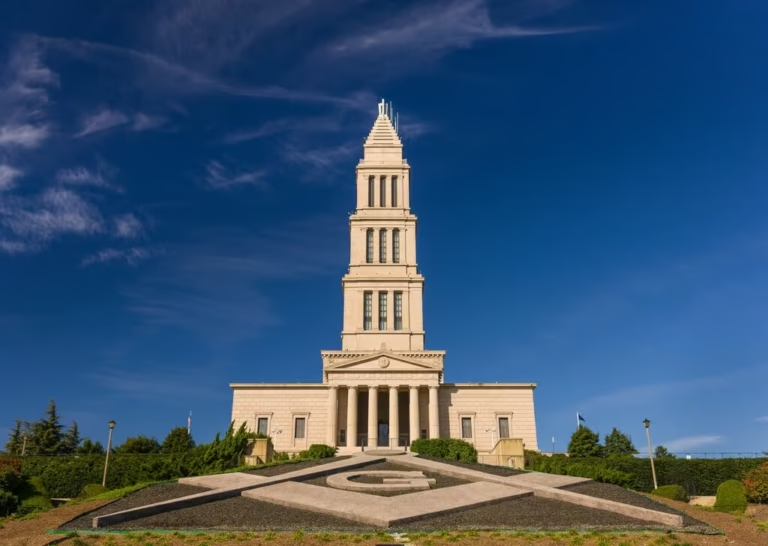
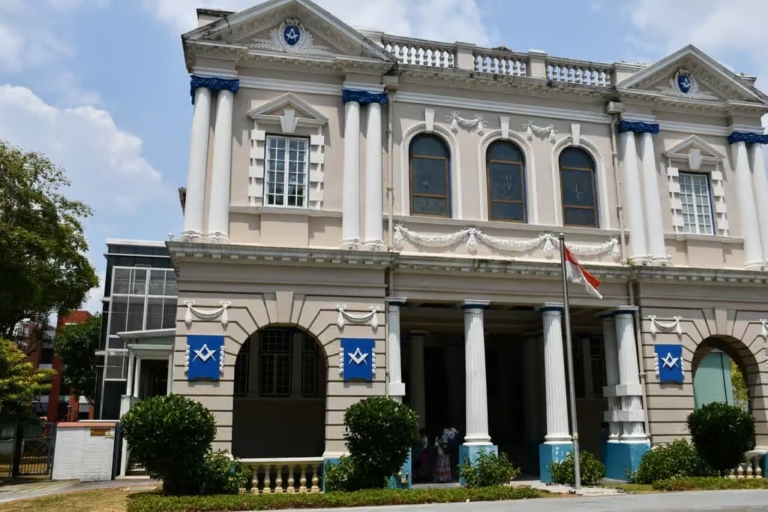
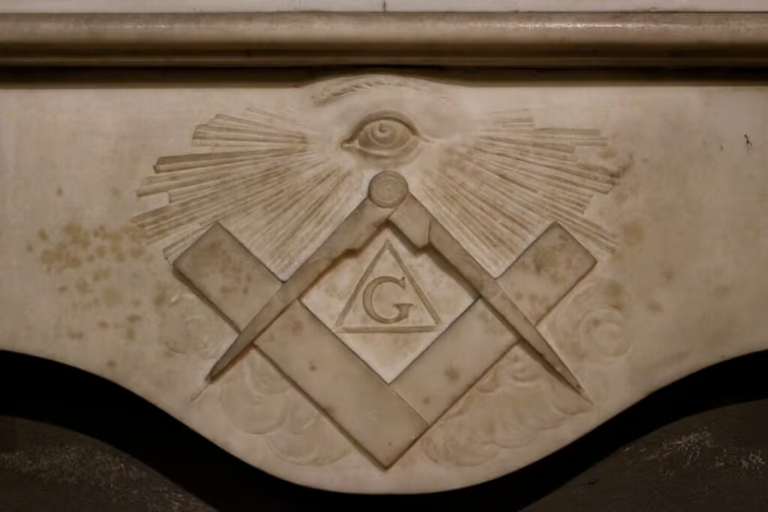
For those wondering about the official process for locating a recognized group in their area, the best and most reliable method is to consult the website of the Grand Lodge for your state, province, or country. Nearly every Grand Lodge has a “Lodge Locator” tool on its official website. By simply entering your city or postal code, you can find a list of the Masonic Lodges in your immediate area, along with their meeting times and often a contact person. This is the officially sanctioned way to find a legitimate and recognized Masonic Lodge. Another traditional method is simply to look for the iconic Square and Compasses symbol on buildings in your town, as many Masonic Lodges have dedicated buildings.

Freemason allied organizations, also known as appendant bodies or concordant orders, are groups that have a direct and formal link to Freemasonry, with a structure that builds upon the foundational Craft degrees. The defining characteristic of these organizations is that membership is restricted to those who are already Master Masons in good standing in a Craft Lodge. These bodies are not part of the core structure of Freemasonry but exist alongside it to expand upon its teachings. The two most prominent systems of allied organizations in many parts of the world are the York Rite and the Scottish Rite, both of which offer a series of additional degrees that elaborate on the themes introduced in the first three degrees of the Craft.

While Freemasonry itself is traditionally for men, the existence of parallel groups for women, based on Masonic principles and structure, is a notable aspect of the wider Masonic family. These are not part of Freemasonry but share a close, cooperative relationship. The most well-known is the Order of the Eastern Star, which is open to both women with specific Masonic affiliations (like wives, daughters, or sisters of Masons) and to Master Masons themselves. In the UK and some other countries, there are also two Lodges of Freemasonry exclusively for women, The Honourable Fraternity of Ancient Freemasons and The Order of Women Freemasons, which practice the same rituals as male Freemasonry but are separate and independent bodies.

A Masonic youth group is an organization for young people sponsored by Masonic bodies, designed to instill core values and develop character in the next generation. These groups are not a “junior” Freemasonry but are designed to instill the same core values of integrity, leadership, charity, and reverence in young men and women. They provide a safe and supportive environment for teenagers to develop character, practice public speaking, manage projects, and engage in community service. The adult leaders and advisors for these groups are typically Masons and members of associated female orders, who volunteer their time to mentor the next generation.

Exploring the various sponsored organizations available for young people reveals a vital part of the wider Masonic family, focused on positive development. There are three primary and internationally recognized groups. DeMolay International is an organization for young men between the ages of 12 and 21. It focuses on developing leadership skills and civic awareness. Job’s Daughters International and the International Order of the Rainbow for Girls are two similar but distinct organizations for young women. Both groups teach leadership, confidence, and the importance of service to others. These youth organizations provide invaluable life skills and friendships under the guidance and mentorship of the Masonic community.

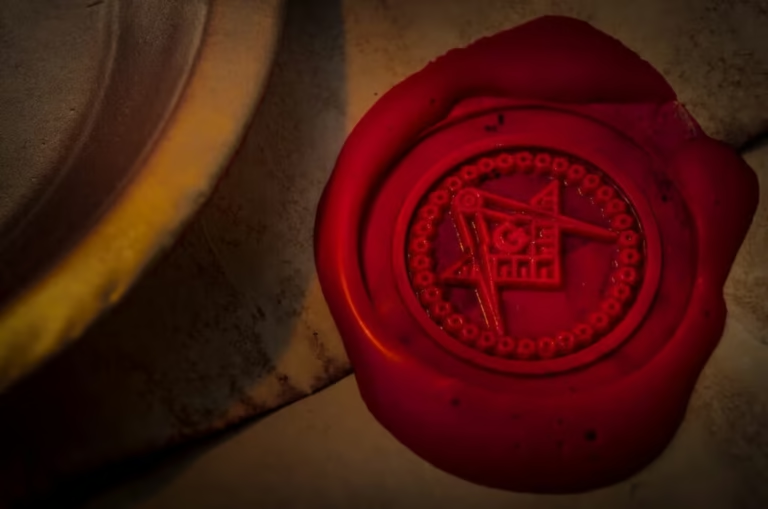
The topic of “Freemason secrets” is perhaps the greatest source of public misunderstanding, so it’s important to understand what is and isn’t actually kept private. Its existence, purpose, principles, and membership are all public knowledge. The so-called secrets are very limited and have to do with its traditional modes of recognition. These are the specific signs, tokens, and words (such as handshakes and passwords) that allow Masons to recognize one another. These traditions are a legacy from the days of operative stonemasons, who used them to prove their level of skill and prevent unqualified individuals from gaining access to a job site. For modern Masons, they serve to guard the entrance to their meetings and preserve a bond of shared experience.
When demystifying these supposed secrets, it becomes clear they are less about hidden knowledge and more about a shared personal experience. The true secret of Freemasonry cannot be told; it must be lived. It is the feeling of brotherhood in a Lodge meeting, the personal insight gained during a ritual ceremony, and the quiet satisfaction of participating in a charitable act. These are the profound experiences that bind Masons together. The moral and philosophical teachings of Freemasonry are openly described in countless books and on public websites. The only things that remain private are the specific rituals and the traditional modes of recognition used between members, whose primary purpose is to create a common, transformative experience for all who join.

To put it plainly, the “Free Masons secrets” are not what conspiracy theories make them out to be. There are no secret plots for world domination or hidden ancient treasures. Such ideas are fundamentally contrary to the core principles of Freemasonry, which demand that a Mason be a peaceful and law-abiding citizen loyal to his country. The private aspects of the fraternity are simply the methods by which it teaches its lessons and allows members to identify one another. The focus is on building a better world by building better men through a variety of structured and informal gatherings, not on controlling it from the shadows.

Platforms like Reddit have become popular forums for discussing almost any topic, and discerning fact from fiction in these online conversations is a crucial skill for the curious. In a subreddit dedicated to the topic, you will find many actual Masons from around the world openly discussing Masonic history, philosophy, and their personal experiences. However, when it comes to “Masonic secrets,” it is important to be discerning. While members might share their perspectives, they are bound by an obligation not to reveal the specific, private details of the rituals or the modes of recognition. Any claim online to reveal these “secrets” is often inaccurate or breaks the solemn promise a Mason makes. The best source of information remains direct conversation with a Mason or consulting official Grand Lodge materials.

Contrary to popular myth, the actual proceedings of a Lodge meeting are a structured combination of three main activities. First, the opening and closing of the Lodge and the performance of degree ceremonies, which are the allegorical rituals that teach Masonic lessons. Second is the business of the Lodge, which includes reading the minutes of the last meeting, voting on bills, discussing charitable donations, and planning future events. Third, and very importantly, is fellowship. It is a time for brothers to connect, share news, and enjoy one another’s company in a harmonious environment. There are no political debates, no business dealings, and no sectarian religious discussions.

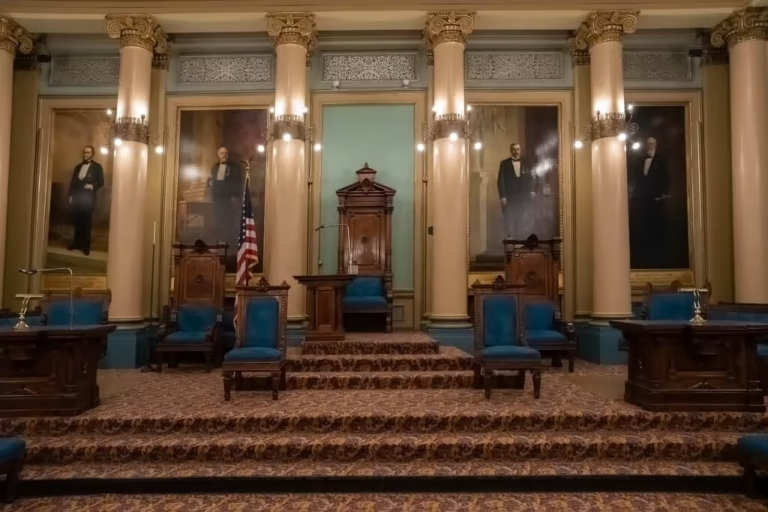
The supposed ‘secrets’ of a Masonic Temple are actually messages written into its design, and understanding the symbolism of the lodge room is key to grasping Masonic philosophy. The design of the main lodge room is based on the description of King Solomon’s Temple, representing a symbolic place to do God’s work. The black and white checkered floor represents the duality of human existence, like good and evil or joy and sorrow. The celestial canopy on the ceiling reminds members of the vastness of the universe and their place within it. The three pillars supporting the Lodge represent Wisdom, Strength, and Beauty. These are not hidden secrets, but open symbols designed to provoke thought and teach moral lessons to those who meet within the Temple’s walls.

There is a vast and accessible library of literature available to anyone interested in the topic. The literature can be broken down into several categories. There are historical books that trace the origins and evolution of the fraternity, written by both Masonic and academic historians. There are philosophical books that delve into the meaning of Masonic symbolism and ritual. For those considering joining, there are many introductory “Freemasonry for Dummies” style guides that provide an excellent overview. Finally, there are books written for Masons themselves, focusing on Masonic education and leadership within the Craft. A wealth of information is openly available for the curious reader.

Unlike a religion, understanding why there is no single holy book is key to grasping Masonic philosophy. The closest thing would be a jurisdiction’s Book of Constitutions, which lays out the laws and regulations, and the official ritual book, which contains the text of the degree ceremonies. However, for the public, classic and highly regarded books like “The Meaning of Masonry” by W.L. Wilmshurst or “Morals and Dogma” by Albert Pike (though dense and often misinterpreted) offer deep dives into Masonic philosophy. For a more modern and accessible start, “Freemasons For Dummies” by Christopher Hodapp is widely recommended.

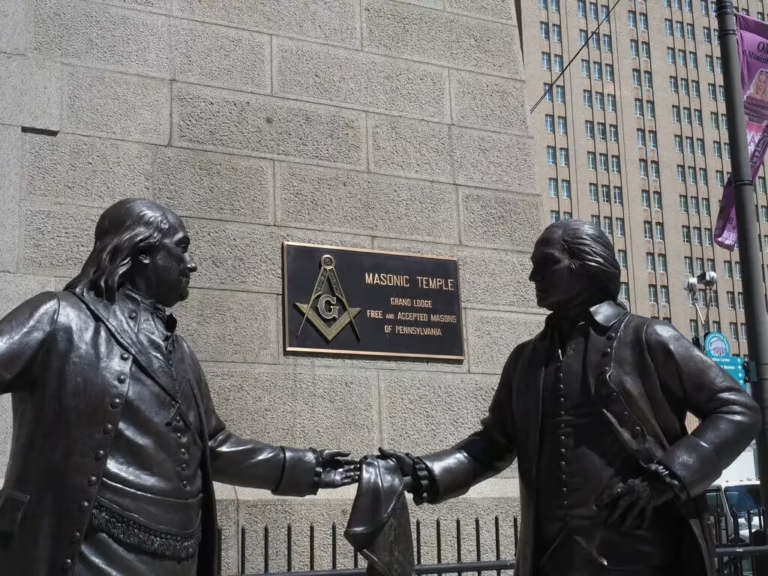
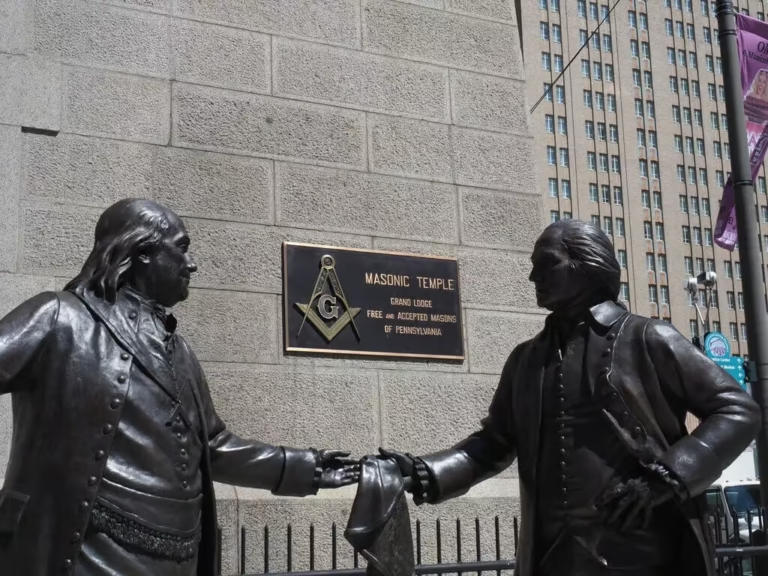
Books about Masons span a wide range of genres, from serious academic studies to speculative fiction. Non-fiction books provide valuable insights into the fraternity’s history, its charitable works, and its philosophical underpinnings. Biographies of famous Masons like George Washington, Benjamin Franklin, or Winston Churchill often explore how Masonic principles may have influenced their lives and actions. On the other hand, the world of fiction has often used Masons as a plot device, most famously in Dan Brown’s “The Lost Symbol.” While entertaining, it is crucial for readers to learn how to distinguish between fictional portrayals and factual accounts of the fraternity.
The term “Masonic Blue Book” is often used informally to refer to a specific type of Masonic publication. In many jurisdictions, this is the common name for the book that lists all the recognized Lodges within that Grand Lodge’s territory. It serves as a directory for members, and understanding the practical function of these official guides is key to appreciating their importance in connecting the fraternity. This allows a traveling Mason to find a Lodge to visit and serves as an important administrative tool for the Grand Lodge. The “blue” simply refers to the traditional color of the cover in many places, which itself is a nod to the blue that symbolizes universal brotherhood and is the characteristic color of Craft Masonry.

A “Masonic Little Blue Book” is another colloquial term, often referring to a small, pocket-sized Masonic text. This could be a condensed version of the jurisdiction’s laws and regulations, a pocket directory of lodges, or, more commonly, a personal monitor or cipher book. The purpose of these pocket-sized ritual aids is to help a Mason learn his ceremonial parts, and they are for his eyes only. It is “little” for portability, allowing him to study his lines conveniently. These books are tools for Masonic education, helping members participate more fully in the rich tradition of the Craft’s rituals.

In conclusion, this overview about Freemasonry shows a story not of secrets and shadows, but of light and learning. It is a fraternity dedicated to the simple yet profound mission of making good men better. Through a shared journey of moral and intellectual growth, using the timeless allegories of the stonemason’s art, members strive to build lives of integrity, compassion, and truth. It is a worldwide brotherhood that transcends all religious, ethnic, and social divides, united by a belief in a Supreme Being and a commitment to charity and mutual support. Far from being an anachronism, the enduring principles of Brotherly Love, Relief, and Truth that Freemasonry champions are more relevant today than ever before.

No, Freemasonry is not a religion, but it does require its members to believe in a Supreme Being. The organization is explicitly described as a secular fraternal organization, and understanding the core tenets of this brotherhood is key to knowing it does not dictate any specific faith or religious dogma. Instead, it provides a moral and ethical framework where men from different religious backgrounds can come together to focus on their shared values of self-improvement, integrity, and charity. The fraternity encourages its members to be freethinkers and to pursue their own personal path to spiritual understanding. The goal is not to replace a member’s faith but to supplement it by offering a structured system for character development based on the principles of Brotherly Love, Relief, and Truth.

The term “Freemason” has historical roots in the operative stonemasons of the Middle Ages who constructed Europe’s great cathedrals and castles. These craftsmen were considered “free” for two primary reasons: they were not serfs bound to a specific lord’s land and were free to travel for work, and they held the “secrets” of their craft, which included advanced knowledge of geometry and engineering. As the era of large-scale cathedral building declined, these operative lodges began accepting “speculative” members who were not stonemasons. These new members focused on using the tools and ethics of masonry as allegories for building a moral character rather than physical structures. Thus, a “Freemason” evolved to mean a free man using Masonic traditions for personal self-improvement, and you can find a straightforward explanation of the modern fraternity’s goals on its official websites.
A Masonic Lodge serves a dual purpose as both a physical space and a collective group of members. As a physical location, it is the building or room where Freemasons hold their meetings. These spaces are often rich with symbolism, laid out to represent King Solomon’s Temple and equipped with furnishings like altars and pillars used in ceremonies. More importantly, a Lodge is the fundamental organizational unit of the fraternity, and understanding how these local groups relate to larger Masonic bodies is key to grasping its structure. It is within this Lodge that he experiences Masonic rituals, participates in business meetings, plans charitable events for the community, and develops strong bonds of fellowship. The Lodge functions as a Mason’s home within the broader fraternity, providing a supportive environment for his journey of self-development.